
Babi Guling
Balinese spit-roasted suckling pig, stuffed with a spice paste and roasted until the skin turns deeply crisp, served with rice, lawar and sambal.
- prep
- 1 h
- cook
- 4 h
- total
- 5 h
- serves
- 10
- level
- hard
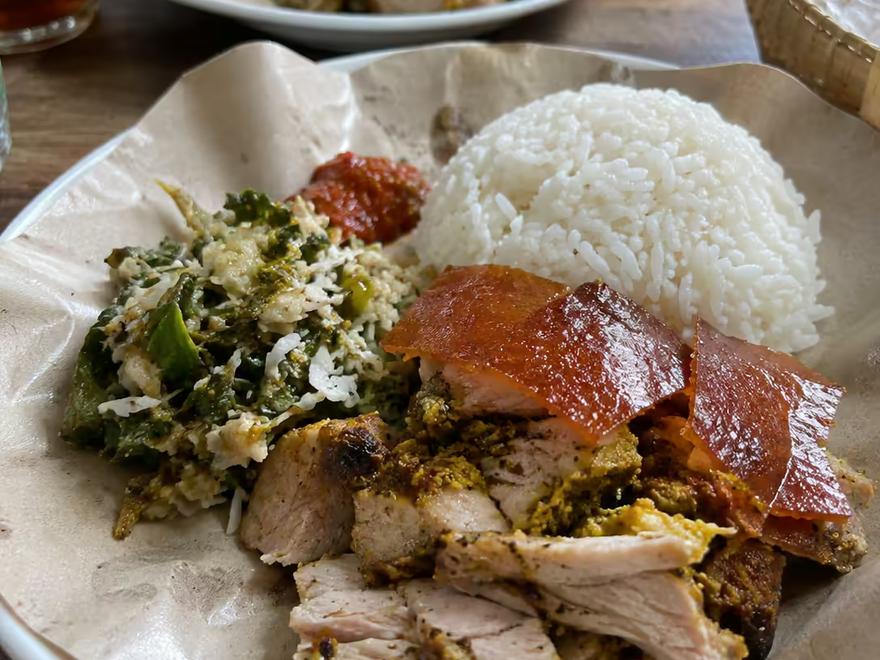
Babi guling is Bali's whole-animal centerpiece, traditionally made for ceremonies and ritual occasions rather than a casual dinner. A suckling pig is stuffed deep with a thick, fragrant Balinese spice paste, then roasted slowly on a spit until the skin blisters into something genuinely crisp.
This is a real project, both in scale and in time, and it starts with a phone call to a butcher rather than a trip to the store. If you want to attempt it, clear a full afternoon and have the pig ordered well ahead.
Part of our 20 best Indonesian recipes list.
method
Blend the shallots, garlic, ginger, galangal, turmeric, candlenuts, chilies, coriander seeds and shrimp paste into a thick, coarse spice paste. This is the Balinese base genep.
Mix most of the paste with the lemongrass and chopped greens if using, and rub it generously all over the inside cavity of the pig, pushing it in as deep as you can reach.
Rub the remaining paste and the coarse salt over the outside of the skin, and let the pig sit for at least 2 hours, or overnight in the fridge, to absorb the flavor.
If spit-roasting, mount the pig on a rotisserie spit over hot charcoal coals, positioned far enough from the direct heat to cook slowly. If using an oven, place it on a rack over a deep roasting pan.
Roast or turn slowly for 3 to 4 hours, basting the skin occasionally with oil, until the internal temperature of the thickest part of the leg reaches at least 70°C (160°F).
In the last 30 to 40 minutes, raise the heat or move the pig closer to the coals, continuing to baste, until the skin blisters and turns deeply crisp all over.
Rest for 15 minutes before carving. Serve the crisp skin and meat with rice, lawar and sambal.
chef's tips
- This is a whole-animal, special-occasion dish in Bali, traditionally made for ceremonies, not a weeknight project. Order the pig from a butcher well in advance.
- Getting the spice paste deep into the cavity, not just on the surface, is what flavors the meat all the way through during the long roast.
- Low heat for most of the cook, then a hot finish for the skin, is the same principle behind most whole-animal roasts. Reversing the order gives you burnt skin over undercooked meat.
- A meat thermometer in the thickest part of the leg is the most reliable way to know it is done, more so than timing alone, since pig size varies a lot.