
Ayam Betutu
Whole chicken rubbed and stuffed with a deep Balinese spice paste, then slow-cooked until tender and intensely fragrant.
- prep
- 40 min
- cook
- 2 h 30 min
- total
- 3 h 10 min
- serves
- 6
- level
- hard
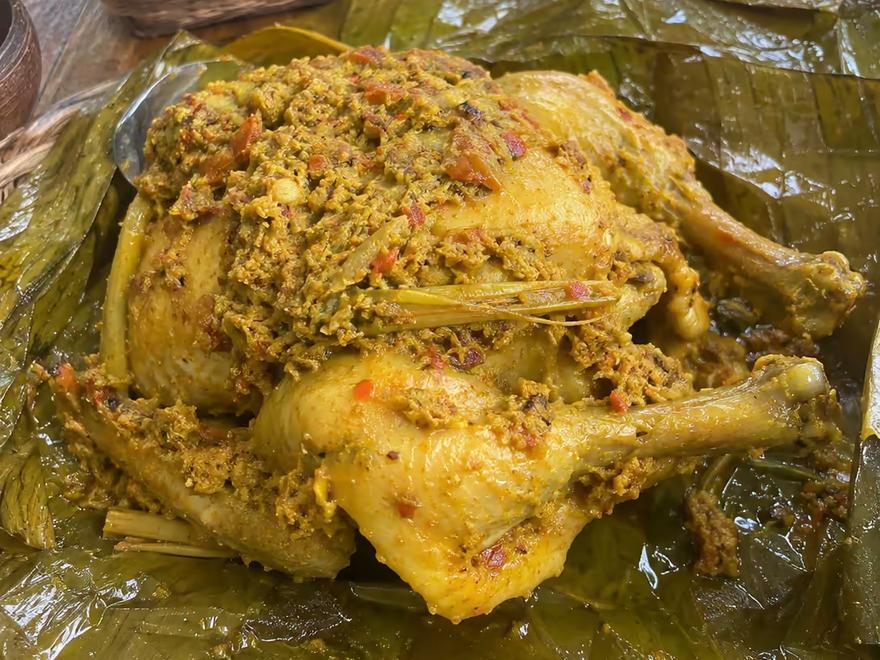
Ayam betutu is Bali's answer to a whole roast chicken, except the bird is packed with spice paste both under the skin and inside the cavity, then wrapped tight and cooked low and slow until the meat is falling-apart tender.
Traditionally it is buried in hot coals or rice husk embers for hours. A steam-then-oven method gets a genuinely close result with ordinary kitchen equipment, so do not feel like you need an open fire to make this properly.
Part of our 20 best Indonesian recipes list.
method
Blend the shallots, garlic, ginger, galangal, turmeric, candlenuts, chilies and shrimp paste into a thick, coarse paste.
Fry about a third of the paste in the coconut oil for 5 minutes to mellow its rawness, then mix it back with the remaining raw paste.
Loosen the chicken skin gently with your fingers, without tearing it, and push a good amount of the paste directly under the skin and over the breast and thighs.
Rub the rest of the paste over the outside of the chicken and inside the cavity, along with the lemongrass and kaffir lime leaves. Season with salt.
Wrap the chicken tightly in banana leaves, then in a layer of foil, to seal in the moisture and aroma.
Steam the wrapped chicken for 1.5 hours, then transfer it, still wrapped, to a 160°C (320°F) oven for a further 45 minutes to 1 hour, until the meat is completely tender and pulls easily from the bone.
Unwrap carefully, as it will be very hot and fragrant, and serve with rice.
chef's tips
- Pushing the paste under the skin, not just rubbing the surface, is what actually flavors the meat rather than just the skin.
- The steam-then-roast method keeps the meat from drying out over the long cooking time. Skipping the steaming step risks a tough, dry result.
- Traditionally this is buried in hot embers or rice husk ash for hours, which few home kitchens can replicate. The steam-and-oven method gets you close with equipment most people actually have.
- Make this a day ahead if you can. Like most dishes built on a big spice paste, the flavor settles and deepens overnight.