
Scottish Porridge
Traditional Scottish porridge made the old way with just oatmeal, water and salt, simmered until thick and served hot with cold cream or milk poured around the edge.
- prep
- 5 min
- cook
- 25 min
- total
- 30 min
- serves
- 2
- level
- easy
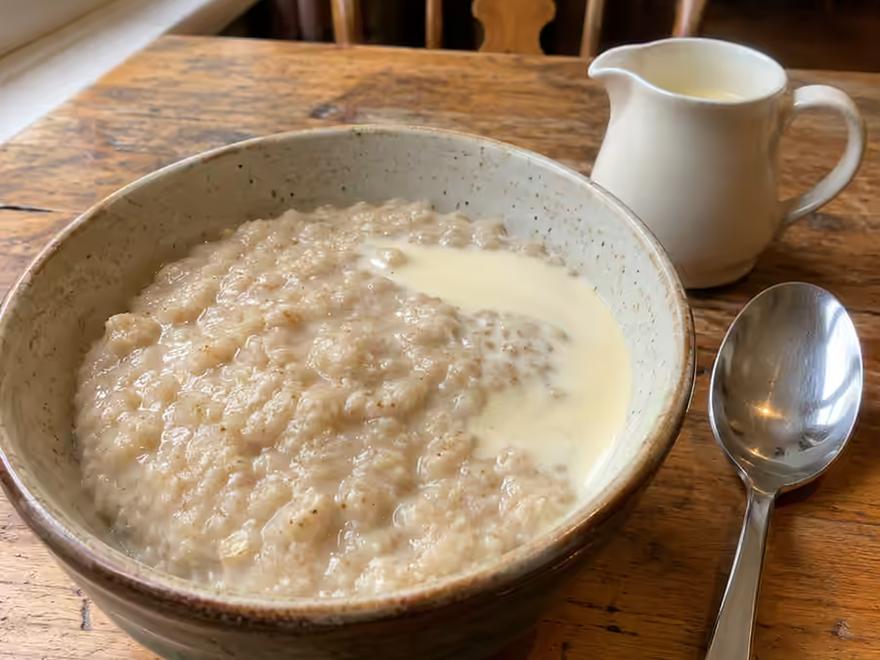
Traditional Scottish porridge is made with oatmeal, water and salt, and nothing else. It is cooked slowly until the oatmeal swells and thickens, then served hot with cold milk or cream poured around the edge. Many Scots eat it with a pinch of salt rather than sugar. The oatmeal is usually stone-ground medium or coarse oatmeal; in the US, stone-ground oatmeal from a natural foods store, or steel-cut oats, are the closest.
The difference between good and gluey porridge is the stirring and the patience. Rain the oatmeal slowly into boiling water while stirring so no lumps form, then keep the heat low and stir often. The traditional tool is a spurtle, a wooden stick that stirs without scraping the pot. Salt goes in toward the end, which many cooks say gives a better texture. Soaking the oatmeal overnight cuts the cooking time by about half.
Scottish Porridge is one of the best breakfasts from around the world.
method
Optional but worthwhile: stir the oatmeal into the water in a saucepan and leave it to soak overnight, covered. This swells the oats and shortens the cooking time to about 10 minutes. Skip this step if you are cooking right away.
For unsoaked oatmeal, bring the water to a boil in a heavy saucepan. Pour the oatmeal into the boiling water in a thin stream with one hand, stirring constantly with a spurtle or wooden spoon with the other, to prevent lumps.
Lower the heat so the porridge bubbles gently and cook for 15 to 20 minutes (8 to 10 minutes if soaked), stirring often and scraping the bottom, until thick, creamy and no longer gritty when you taste it.
Stir in the salt in the last 5 minutes. If the porridge is too thick, loosen it with a splash of hot water. It should fall off the spoon in a soft, slow ribbon.
Take the pan off the heat, cover, and let the porridge sit for 2 minutes so it settles and thickens slightly.
Ladle into warm bowls and pour the cold cream around the edge, then add a splash of milk if you like. Serve at once with extra salt on the table, or a little honey.
chef's tips
- Warm the bowls first, because porridge cools quickly and goes stiff.
- Use a heavy-bottomed pot. Thin pots scorch the oatmeal at the bottom.
- Leftover porridge sets firm. Slice it and fry it in butter for a crisp second breakfast, or loosen it with milk and reheat.
- Rolled oats work but give a softer, less nutty result. Cook them for 5 to 8 minutes.