
Schweinshaxe mit Knödel
A roasted pork knuckle with shattering, crisp crackling, served with a bread or potato dumpling and dark beer gravy. Bavaria's beer-hall centerpiece.
- prep
- 30 min
- cook
- 3 h
- total
- 3 h 30 min
- serves
- 4
- level
- hard
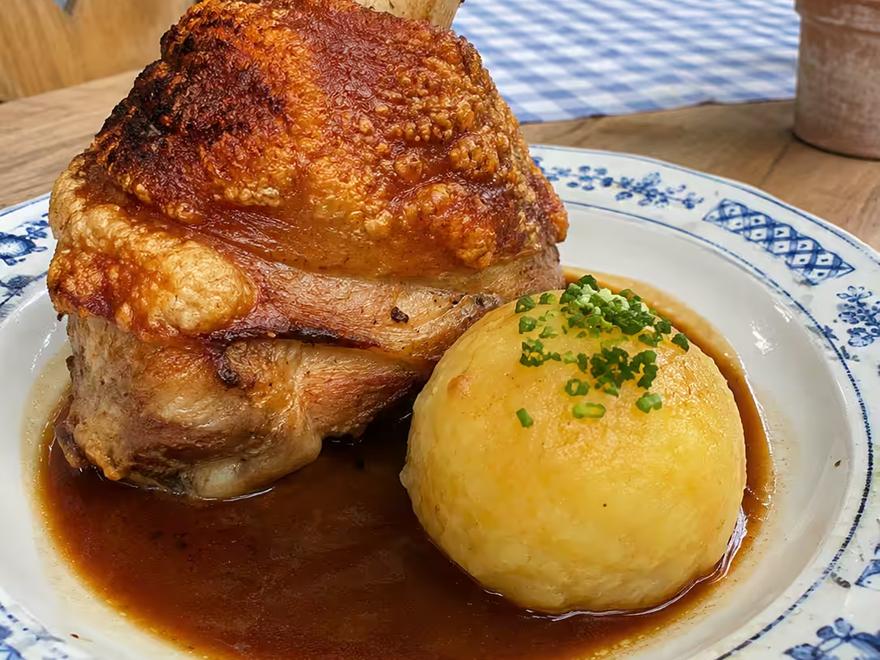
Schweinshaxe is the pork knuckle you will see carried, whole and glistening, across a Bavarian beer hall, with skin cracked into shards you can hear from across the table. It is a fresh, unbrined knuckle, roasted rather than boiled, which is what sets it apart from Berlin's Eisbein elsewhere on this list.
The skin is the whole performance, and it comes down to two stages done in the right order: a long, gentle roast to render the fat and cook the meat through, then a hard blast of heat at the very end to blister the dried-out skin into crackling.
Part of our 20 best German recipes list.
method
Pat the knuckles completely dry and rub salt and caraway seeds into the scored skin. Leave uncovered in the fridge for at least a few hours, or overnight, to dry the skin further.
Preheat the oven to 160°C (320°F). Scatter the onion, carrot and celery in a roasting pan and set the knuckles on top, skin side up.
Pour the water and half the beer into the pan around, not over, the knuckles. Add the bay leaves.
Roast for 2 to 2.5 hours, basting the skin occasionally with the pan juices and remaining beer, topping up with water if the pan runs dry, until the meat is very tender and pulls easily from the bone.
Raise the oven temperature to 230°C (445°F). Roast for a further 20 to 30 minutes, without basting this time, until the skin blisters, bubbles and turns deeply golden and crisp.
Lift out the knuckles and rest for 10 minutes. Strain the pan juices into a saucepan, skim off excess fat, and simmer to reduce. Thicken with a little cornstarch slurry if you want a thicker gravy.
Serve the knuckles whole with the gravy, a dumpling, and red cabbage alongside.
chef's tips
- Drying the skin well before it goes anywhere near heat is the real secret to crackling. A wet skin steams instead of crisping.
- Low heat for most of the cook, then a hot finish just for the skin, is the whole technique. Reverse the order and you get a burnt outside over tough meat.
- Basting with the pan juices during the long roast keeps the meat from drying out, even though you want the final skin to go dry and crisp.
- This is a two-person dish by most restaurant portions; one knuckle easily feeds two with sides.