
Sándwiches de Miga
Thin, crustless white-bread sandwiches, classically filled with ham and cheese, sometimes layered into a triple. A party and afternoon-tea staple.
- prep
- 15 min
- cook
- 0 min
- total
- 15 min
- serves
- 6
- level
- easy
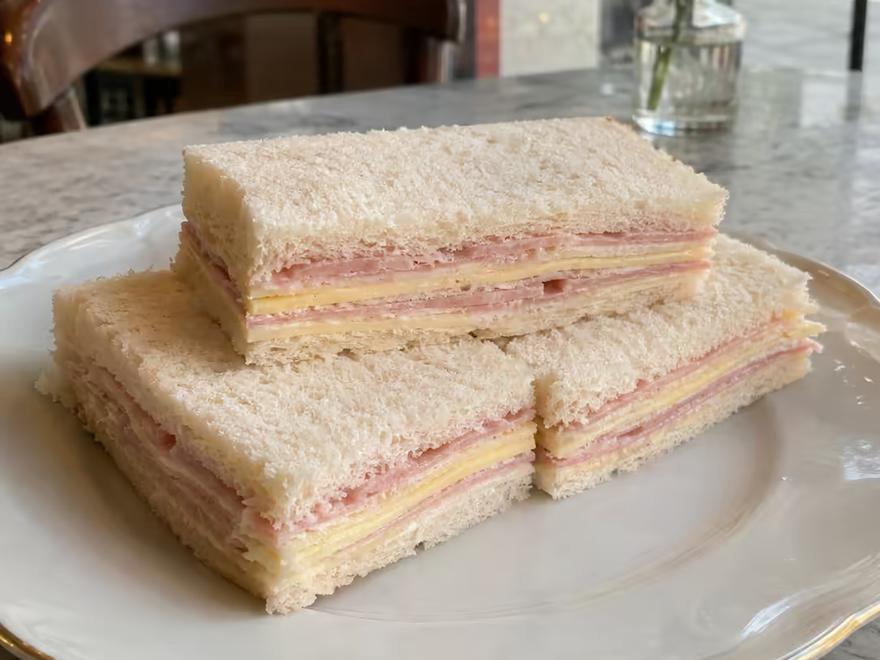
Sándwiches de miga are a fixture at Argentine parties and afternoon gatherings, built on bread sliced so thin and soft it barely resembles a regular sandwich loaf, with the crusts removed entirely.
Ham and cheese is the classic, simplest filling, but the triple version, three layers of bread with two fillings stacked between them, is just as common and makes a more substantial bite for the same footprint on a platter.
Part of our 20 best Argentine recipes list.
method
Spread a thin, even layer of butter over each slice of bread.
Lay ham on half the slices, and cheese on the other half, so you have an even number of each to build complete sandwiches.
Spread a very thin layer of mayonnaise on the cheese slices if using.
Sandwich a ham slice and a cheese slice together, pressing down gently.
For a triple, use three slices of bread with two layers of filling, alternating ham and cheese between them.
Trim the edges neatly if they are uneven, then cut each sandwich into two or four smaller triangles or rectangles.
Stack on a platter, covered with a slightly damp cloth, until ready to serve; these are meant to stay soft, not toasted.
chef's tips
- Pan de miga is a specific thin, soft, crustless bread sold at Argentine bakeries specifically for this. Regular soft white sandwich bread, crusts removed and gently flattened with a rolling pin, is a reasonable substitute.
- These are classically served untoasted and soft, which is part of the point. A toasted version exists and is popular too, but it is a different, separate preparation.
- A very light hand with the mayonnaise and butter keeps the sandwiches from getting soggy before serving, especially if you are making a large platter ahead of time.
- Covering the stack with a slightly damp cloth while they wait keeps the thin bread from drying out at the edges.