
Oyster Omelette (Orh Luak)
Fresh oysters fried with egg and a starch batter that turns crisp at the edges and stays chewy inside, served with tangy chili sauce.
- prep
- 15 min
- cook
- 15 min
- total
- 30 min
- serves
- 2
- level
- medium
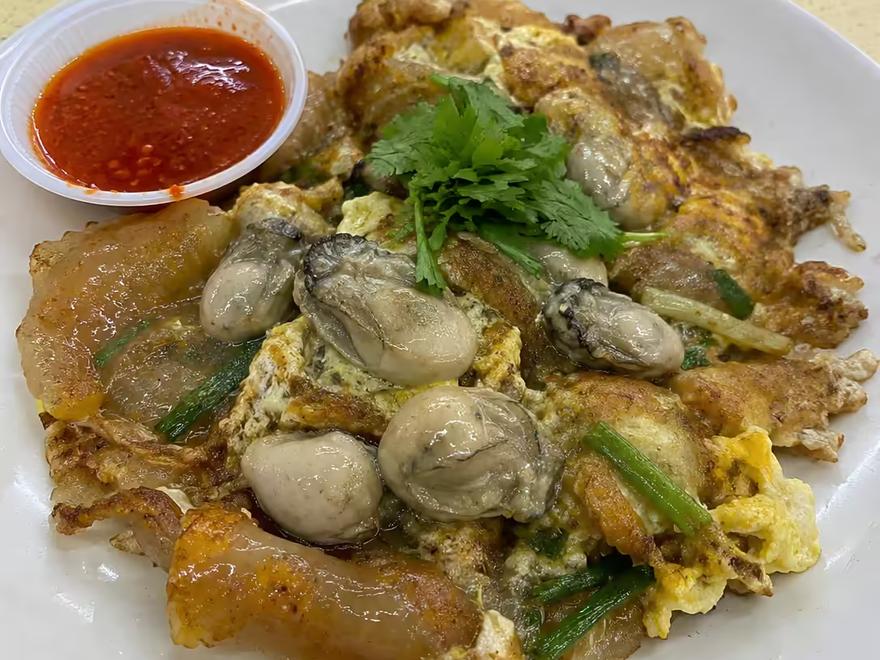
Orh luak gets its texture from a starch slurry, not just egg, and that is what gives it the lacy, crisp edges with a center that stays soft and a little gooey. It is a genuine textural contrast, not a cooking mistake if your first one looks uneven.
This cooks fast and in stages: starch first, then oysters and egg, then a patient couple of minutes without stirring so the bottom actually crisps. Rush any of those stages and you get a flat, uniform omelette instead of the real thing.
Part of our 20 best Singapore recipes list.
method
Whisk the sweet potato starch with the water until smooth, with no lumps.
Heat half the oil in a flat nonstick or well-seasoned pan over medium-high heat. Add the garlic and fry for 30 seconds.
Give the starch slurry a quick re-stir and pour it into the pan. Let it sit, mostly undisturbed, for 1 to 2 minutes, until it turns translucent and starts to set at the edges.
Scatter the oysters over the starch layer. Beat the eggs with the fish sauce and white pepper, and pour them over the top.
Drizzle the remaining oil around the edges of the pan. Let it cook for 2 minutes without stirring, so the bottom and edges crisp up.
Flip the omelette in large sections, or break it up and turn the pieces, cooking for another 2 to 3 minutes, until the egg is just set and the edges are crisp and lacy.
Scatter over the scallions and serve immediately with chili sauce and a squeeze of lime.
chef's tips
- The contrast is the whole point: crisp, almost lacy edges against a soft, slightly gooey center where the starch and egg meet. Do not aim for a uniformly firm omelette.
- Small oysters work better than large ones here. Big oysters can turn rubbery in the short cooking time this dish uses.
- A well-seasoned wok or a very good nonstick pan matters, since this dish involves breaking and flipping sections rather than one clean flip.
- Serve it the moment it comes off the heat. The crisp edges soften fast as the dish sits.