
Leche Flan
A rich, silky egg-yolk and milk custard topped with amber caramel syrup. The Philippines' version of crème caramel, made with far more egg yolks than most.
- prep
- 15 min
- cook
- 40 min
- total
- 55 min
- serves
- 6
- level
- medium
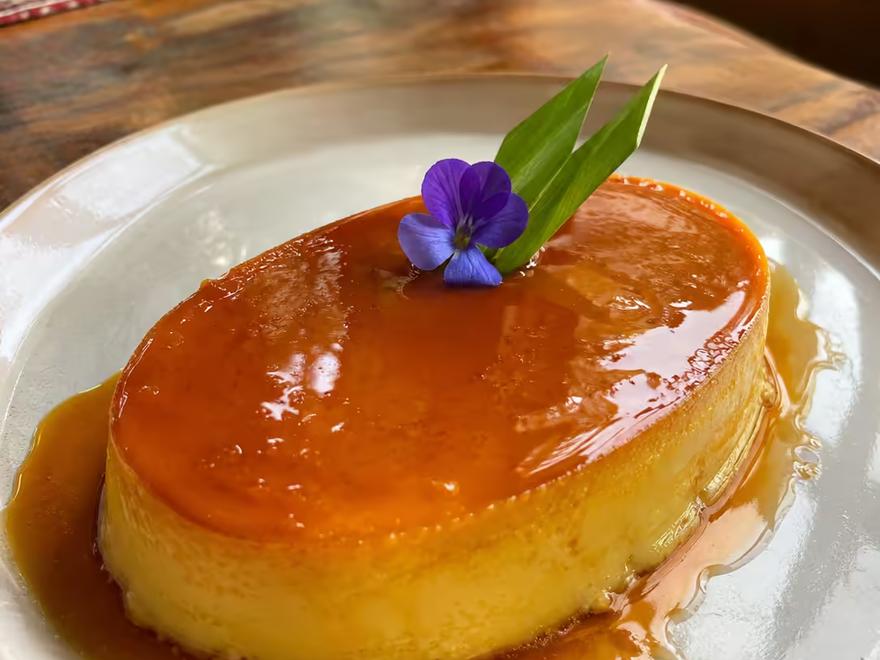
Leche flan uses noticeably more egg yolks than most other countries' versions of baked caramel custard, which is exactly why Filipino leche flan has a reputation for being extra dense and rich.
Straining the mixture before it goes in the oven is a small step that makes a real difference, pulling out the air bubbles that would otherwise leave the finished custard a little grainy instead of glass-smooth.
Part of our 20 best Filipino recipes list.
method
Preheat the oven to 160°C (320°F). Make the caramel: heat the sugar and water in a small pan over medium heat, swirling occasionally, until it turns a deep amber. Pour into the bottom of a round baking dish or individual molds (llaneras), tilting to coat the base.
Whisk the egg yolks gently, without creating too much foam.
Whisk in the condensed milk, evaporated milk and vanilla until smooth.
Strain the mixture through a fine sieve to remove any foam or stray bits, for the silkiest texture.
Pour the custard over the set caramel.
Cover the dish tightly with foil, and place it in a larger roasting pan. Add hot water to come halfway up the sides.
Bake for 35 to 40 minutes, until just set but still a little wobbly in the center.
Cool completely, then chill for at least 4 hours, ideally overnight.
To serve, run a thin knife around the edge and invert onto a plate, letting the caramel run down over the custard.
chef's tips
- Leche flan uses far more egg yolks than a typical crème caramel, which is exactly what gives it that extra-rich, dense texture Filipino versions are known for.
- Straining the custard before baking removes the little air bubbles whisking creates, and it's the real secret to a glassy-smooth finish.
- Covering the dish with foil during baking keeps the top from browning or forming a skin while it steams gently in the water bath.
- Chill it fully before unmolding; a still-warm custard is far more likely to break apart when you try to turn it out.