
Laing
Dried taro leaves slowly cooked in coconut milk with chili and aromatics, often simmered with pork or dried seafood until deeply flavored.
- prep
- 20 min
- cook
- 45 min
- total
- 1 h 5 min
- serves
- 6
- level
- medium
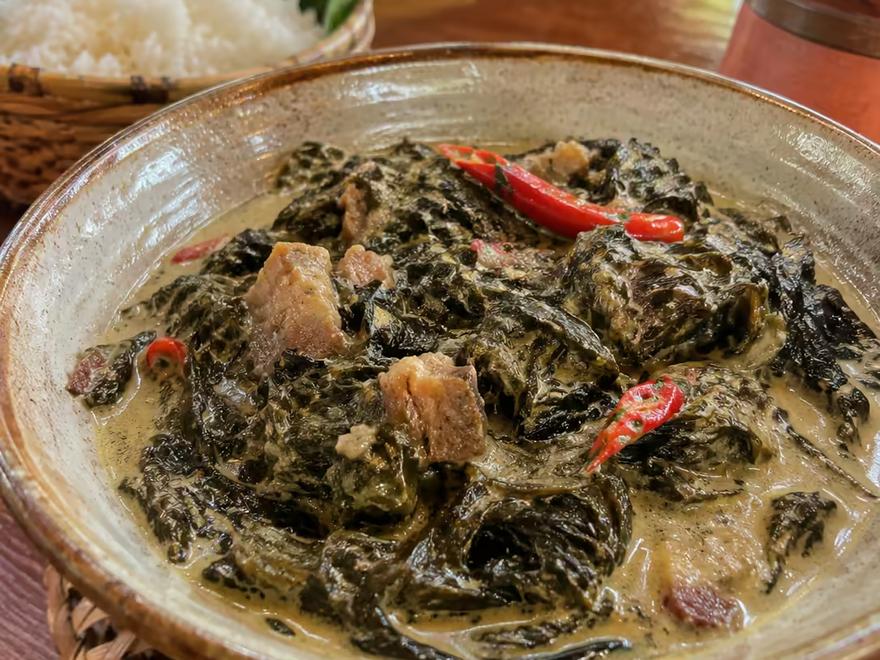
Laing comes from Bicol, the Philippines' most chili-loving region, dried taro leaves simmered low and slow in coconut milk with pork or dried seafood until they turn tender and deeply flavored.
The long simmer matters for more than flavor. Taro leaves carry a mild irritant that needs real cooking time in the coconut milk to fully neutralize.
Part of our 20 best Filipino recipes list.
method
If the taro leaves are whole and dried, break them into smaller pieces.
Heat a wide, heavy pan or pot, and cook the pork belly until lightly browned, rendering some fat.
Add the onion, garlic and ginger, and cook for 5 minutes.
Stir in the shrimp paste and cook for 1 to 2 minutes.
Add the coconut milk and bring to a gentle simmer.
Add the dried taro leaves, pressing them down into the liquid. Do not stir too much at first, let them soften gradually.
Simmer gently, uncovered, for 30 to 40 minutes, stirring occasionally, until the leaves are tender and most of the liquid has been absorbed.
Stir in the coconut cream and the chilies in the last 10 minutes, and simmer until thickened.
Serve warm as a side with rice.
chef's tips
- Taro leaves must be properly dried and cooked long enough, or they carry a mild irritant that causes an itchy sensation in the throat; a thorough, long simmer in coconut milk neutralizes this.
- Resist the urge to stir constantly at the start. Letting the leaves sit and soften in the coconut milk gives a better final texture than aggressive stirring.
- Laing comes from Bicol, the same chili-loving region as Bicol Express, and the two dishes share a similar generous hand with heat.
- This is traditionally made with dried taro leaves rather than fresh ones, which concentrate the flavor and are easier to find outside the Philippines.