
Kangaroo Fillet with Pepperberry Sauce
Seared kangaroo fillet, kept rare to medium-rare, with a pan sauce built on native Australian pepperberry. Contemporary Australian cooking at its leanest.
- prep
- 15 min
- cook
- 10 min
- total
- 25 min
- serves
- 4
- level
- medium
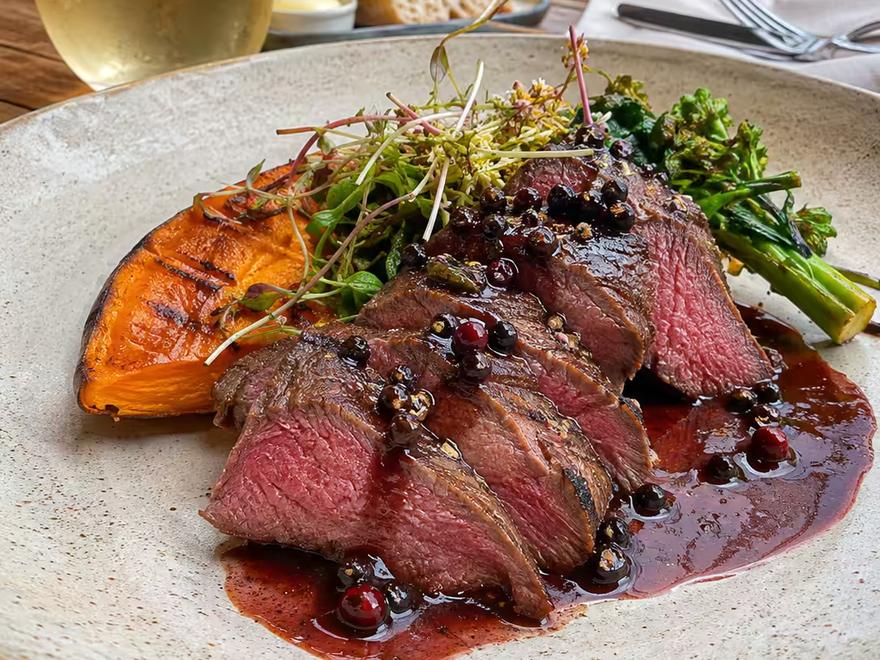
This sits at the newer, contemporary end of Australian cooking, built around native ingredients rather than the British-derived classics that make up most of this list. Kangaroo is extremely lean, with none of the fat that forgives a slow hand on other cuts.
Native pepperberry, also called mountain pepper, brings a distinct, fruity heat that is genuinely its own flavor, not just a more expensive stand-in for black pepper.
Part of our 20 best Australian recipes list.
method
Bring the kangaroo fillet to room temperature and pat dry. Season with salt and pepper.
Heat the olive oil in a heavy pan over high heat until just smoking.
Sear the fillet for 2 to 3 minutes per side, until well browned on the outside but still rare to medium-rare inside. Kangaroo is very lean and toughens fast past this point.
Rest the fillet on a board, loosely tented with foil, for 5 to 10 minutes.
In the same pan, soften the shallot for 2 minutes, then add the red wine and simmer until reduced by half.
Add the stock and pepperberry, and simmer for 5 minutes, until slightly thickened. Swirl in the butter off the heat to finish the sauce.
Slice the rested kangaroo against the grain and serve with the pepperberry sauce spooned over.
chef's tips
- Kangaroo is extremely lean, with almost no fat to buffer overcooking. Rare to medium-rare is the right target; cooked through, it turns noticeably tough and livery.
- Native pepperberry, also called mountain pepper, has a distinct peppery heat with a fruity edge that is genuinely different from black pepper, not just a fancy substitute for it.
- Resting the meat matters even more than usual here, given how lean it is. Skipping the rest loses more juice relative to the meat's size than it would with a fattier cut.
- This sits at the contemporary end of Australian cooking, built on native ingredients, rather than the older British-derived classics elsewhere on this list.