
Bacon and Eggs
Thick-cut bacon and fried eggs, cooked together in one skillet, the breakfast Howl cooks for Sophie and Markl over the living fire demon Calcifer.
- prep
- 5 min
- cook
- 10 min
- total
- 15 min
- serves
- 2
- level
- easy
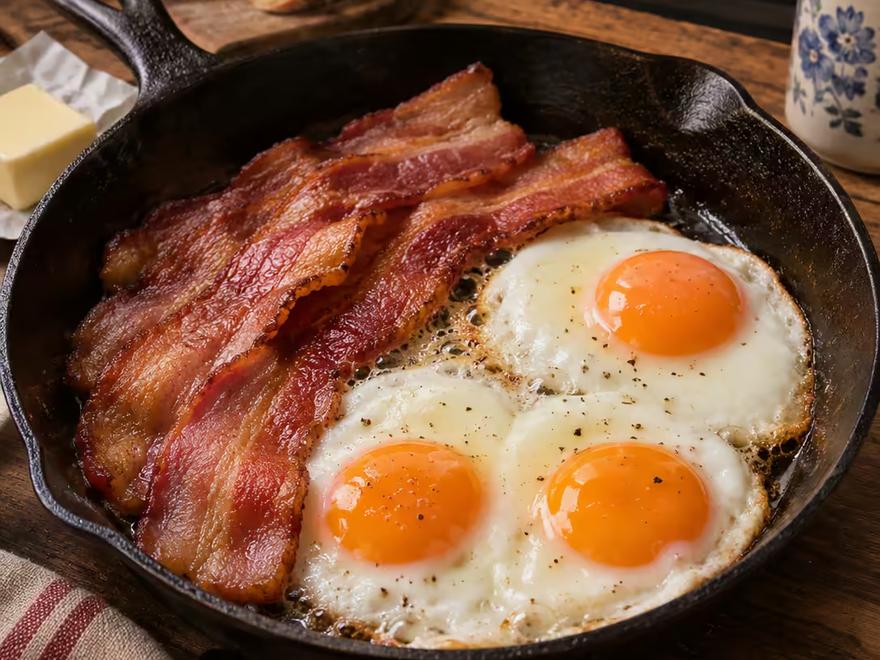
Howl cooks this exact breakfast in one skillet over Calcifer, the living fire demon who powers his whole moving castle, in Howl's Moving Castle (2004), a scene that has become one of the most quietly beloved, cozy domestic moments in the film.
There's no trick to this one beyond doing it properly: thick bacon cooked until crisp at the edges, then eggs fried directly in that same rendered fat, which is where most of the real flavor actually comes from.
Part of our 40 famous movie foods list.
method
Heat a large skillet over medium heat, and lay the bacon slices in, without overlapping.
Cook for 4 to 5 minutes per side, until deeply golden and crisp at the edges but not brittle.
Push the bacon to one side of the pan, or remove it to a plate and keep warm, leaving the rendered fat behind.
Crack the eggs directly into the same pan, into the hot bacon fat.
Cook for 2 to 3 minutes, until the whites are set and the edges are lightly crisp, keeping the yolks soft if you like, or longer if you prefer them firmer.
Season with salt and pepper, and serve the eggs and bacon together straight from the pan.
chef's tips
- Cooking the eggs directly in the rendered bacon fat, rather than a separate pan with fresh oil, is what gives this its full, savory flavor; it's a classic technique, not a shortcut.
- In Howl's Moving Castle (2004), Howl cooks this exact breakfast in one skillet over Calcifer, the living fire demon who powers his magical castle, in a scene that has become one of the most quietly beloved domestic moments in the film.
- Thick-cut bacon holds up better in a hot pan than thin bacon, crisping at the edges while staying a little chewy in the middle rather than turning brittle all the way through.
- This is about as simple a dish as this whole list gets, and that's the point; its charm in the film comes entirely from the warm, everyday ritual of it, not any culinary complexity.