
Firfir
Ethiopian firfir: torn injera simmered in a spiced berbere and niter kibbeh sauce with onion and garlic. A fast, deeply flavored way to use up leftover injera for breakfast.
- prep
- 10 min
- cook
- 30 min
- total
- 40 min
- serves
- 4
- level
- easy
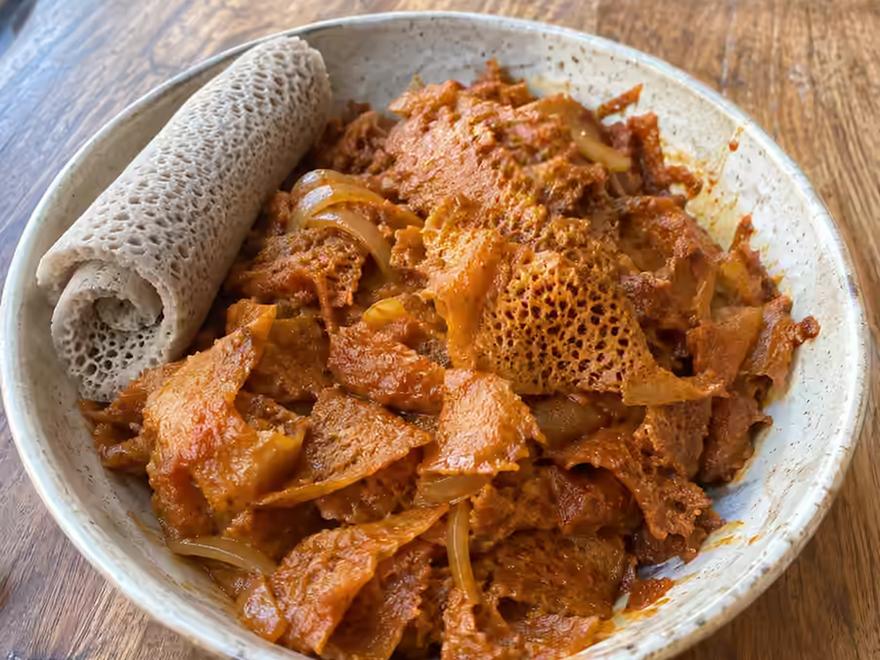
Firfir is torn injera cooked briefly in a spicy sauce until it absorbs the flavor. It is a classic way to use injera that has gone a day or two stale, and it is a common Ethiopian breakfast, eaten by hand and scooped up with extra injera.
The sauce decides everything. The onions are cooked down slowly in a dry pan first, then spiced butter (niter kibbeh) and berbere go in, and the sauce simmers until it turns brick red and the fat shimmers at the edges. Add the injera at the end and toss only until it is coated: longer cooking turns it to paste.
Berbere is also the backbone of doro wat, the Ethiopian chicken stew that makes a good dinner follow-up.
Firfir is one of the best breakfasts from around the world.
method
Put the sliced onions in a wide, dry skillet over medium-low heat with a pinch of salt. Cook, stirring often, for 8 to 10 minutes until soft and just starting to color. If they stick, add a splash of water.
Add the niter kibbeh, garlic and ginger and cook for 2 minutes. Stir in the berbere and tomato paste and cook 2 more minutes, until fragrant and the paste darkens. Keep the heat moderate so the berbere does not scorch.
Pour in the water, add 1/2 teaspoon salt and simmer for about 10 minutes, until the sauce is thick like a stew and the oil shimmers at the edges. Taste and add salt or more berbere.
Add the torn injera in two handfuls, stirring gently, and cook over medium heat for 2 to 3 minutes, until the pieces have soaked up the sauce and are soft but still hold their shape. If it looks dry, add a splash of water.
Serve hot, straight from the skillet, with the rolled injera on the side for scooping.
chef's tips
- Day-old injera holds together better. Very fresh injera makes a softer, mushier firfir.
- No niter kibbeh? Melt butter with a pinch each of ground cardamom and turmeric, or just use ghee.
- Berbere varies a lot in heat. Start with 1 tablespoon, taste the sauce, and add more.
- For a dairy-free version, use a neutral oil instead of niter kibbeh. Oil is the usual fat in Ethiopian dishes made for fasting days.