
Fideuà de Gandia
Short, toasted noodles cooked in a wide pan with prawns, squid and fish stock, Valencia's seafood answer to paella, usually served with alioli.
- prep
- 20 min
- cook
- 30 min
- total
- 50 min
- serves
- 4
- level
- medium
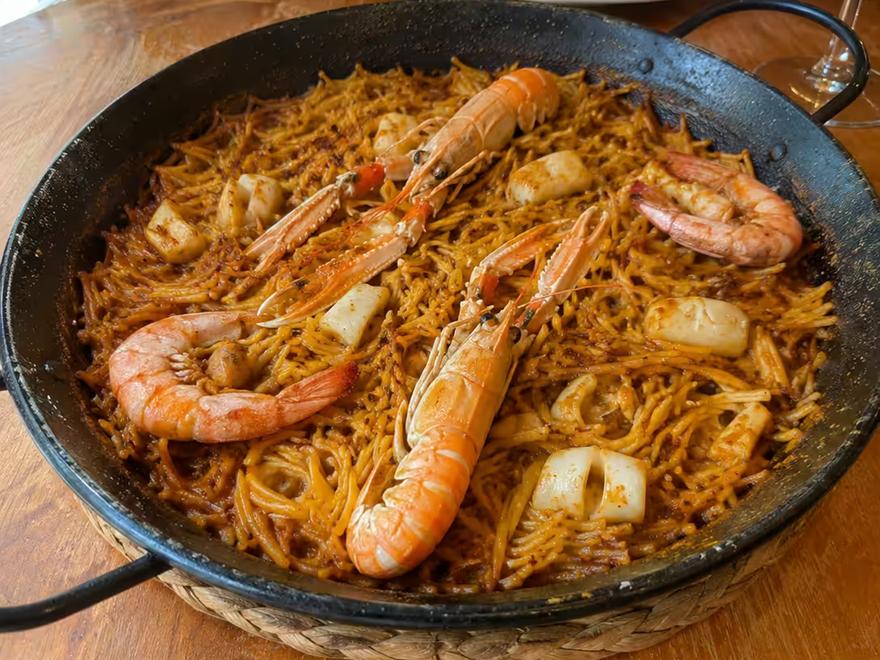
Fideuà comes from Gandia, on the Valencian coast, and it is often described as paella made with noodles instead of rice. The short noodles are toasted first, which gives the dish a nutty, almost roasted flavor that plain rice does not have.
The technique borrows directly from paella: build a quick sofrito, add hot stock, then leave it alone. A spoonful of alioli stirred into your bowl at the table is how most people actually eat it.
Part of our 20 best Spanish recipes list.
method
Heat half the olive oil in a paella pan over medium-high heat. Add the squid and prawns and sear for 1 to 2 minutes, just to color them. Remove and set aside.
Add the remaining oil to the pan. Add the noodles and toast them, stirring often, for 3 to 4 minutes, until golden brown all over. This step is what gives fideuà its flavor, so do not skip it.
Push the noodles aside, add the tomato and garlic to the center, and cook for 2 to 3 minutes until the tomato darkens. Stir in the paprika for a few seconds, then mix everything together.
Pour in the hot stock and add the saffron and salt. Spread the noodles evenly across the pan and do not stir again from this point.
Simmer for 8 to 10 minutes, until the liquid is mostly absorbed. Return the squid and prawns to the top of the pan for the last 4 to 5 minutes to finish cooking.
Take off the heat once the noodles are tender and the top looks dry, with the tips of the noodles starting to crisp. Rest for a few minutes and serve with alioli on the side.
chef's tips
- Toasting the raw noodles in oil before adding any liquid is the one step that makes this dish what it is. Skipping it leaves you with plain seafood noodle soup.
- Like paella, stop stirring once the stock goes in. The noodles need to sit still to cook evenly and catch slightly at the bottom.
- Alioli on the side is traditional, not optional. A spoonful stirred into your portion makes the dish noticeably richer.
- Short noodles, broken by hand if you buy them long, cook faster and are easier to eat than full-length pasta here.