
Crema Catalana
A chilled Catalan custard scented with citrus and cinnamon, thickened on the stovetop and topped with a thin, brittle layer of caramelized sugar.
- prep
- 20 min
- cook
- 15 min
- total
- 35 min
- serves
- 6
- level
- medium
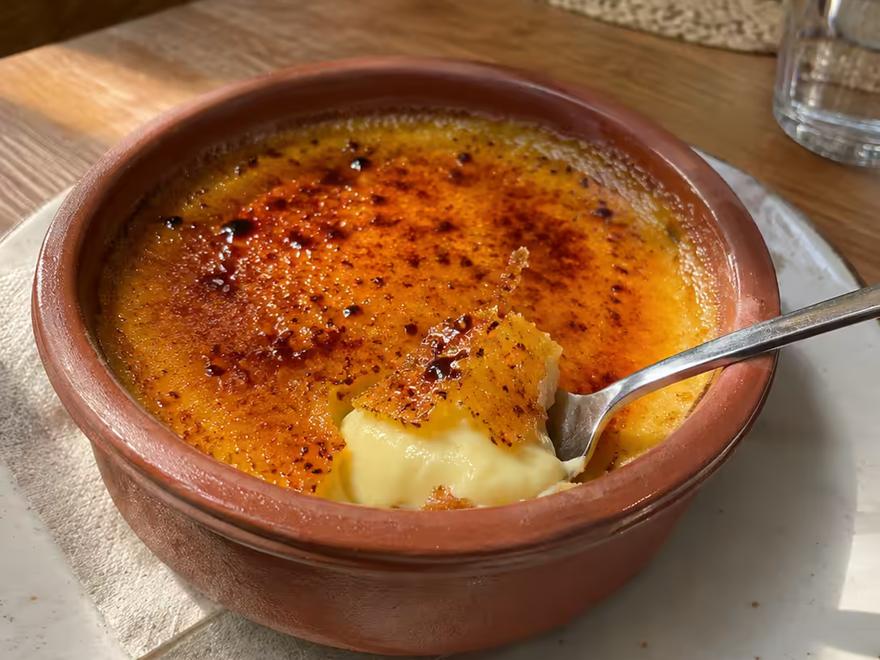
Crema catalana looks like crème brûlée and gets compared to it constantly, but it is a different dessert with real differences. It is built on milk instead of cream, thickened with cornstarch on the stovetop, and scented with citrus zest and cinnamon.
The caramelized sugar top is non-negotiable, but the timing matters. Torch it too early and it turns soft and sticky before you serve it. Do that part last, right before the dish goes to the table.
Part of our 20 best Spanish recipes list.
method
Heat the milk in a saucepan with the lemon zest, orange zest and cinnamon stick, until it just starts to steam. Take off the heat and let it infuse for 15 minutes, then strain and discard the zest and cinnamon.
Whisk the egg yolks and sugar together in a bowl until pale. Whisk in the cornstarch until smooth.
Pour a little of the warm milk into the yolk mixture, whisking constantly, then pour this back into the rest of the milk in the saucepan.
Cook over low heat, stirring constantly with a wooden spoon, for 8 to 10 minutes, until the custard thickens enough to coat the back of the spoon. Do not let it boil, or the eggs will scramble.
Pour the custard into shallow individual dishes, about 2 cm deep. Let them cool to room temperature, then cover and chill for at least 4 hours, or overnight.
Just before serving, sprinkle an even layer of sugar over the top of each custard. Caramelize it with a kitchen blowtorch, moving in small circles, until it is deep amber and brittle.
Let the sugar harden for 1 minute, then serve right away, while the top is still crackling.
chef's tips
- Cornstarch, not a water bath, is what thickens this custard. That is the real difference from French crème brûlée, which uses cream and no starch.
- Shallow, wide dishes give you more surface area of caramelized sugar per spoonful, which is the best part.
- Caramelize the sugar as close to serving as you can. It softens within half an hour as it sits.
- Traditionally this is made for Saint Joseph's Day in March, but there is no real reason to wait for it.