
Cochinillo Asado
Segovia-style roast suckling pig, seasoned simply with salt and water, roasted low and slow until the skin shatters and the meat falls apart.
- prep
- 20 min
- cook
- 2 h 30 min
- total
- 2 h 50 min
- serves
- 8
- level
- hard
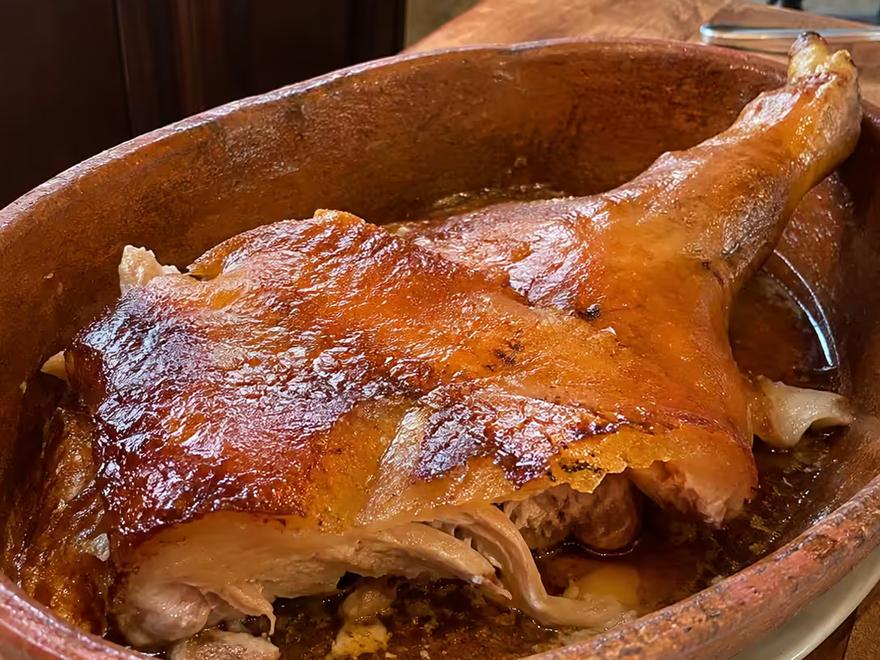
In Segovia, cochinillo asado is cooked so plainly that the only seasoning is salt, and so slowly that the meat is famously tender enough to be cut at the table with the edge of a plate instead of a knife.
This is a real project, not a weeknight dish, and it starts with a phone call to a butcher rather than a trip to the supermarket. If you want to make it properly, order the piglet ahead of time and give yourself the better part of a day.
Part of our 20 best Spanish recipes list.
method
Bring the pig to room temperature before roasting, which can take a few hours. Preheat the oven to 150°C (300°F).
Pat the skin completely dry. Rub the inside cavity lightly with the lard and season with half the salt. Do not use any other spices or marinade; the Segovia style is deliberately plain.
Place the pig skin-side up in a large roasting pan. Pour the water into the bottom of the pan, not over the pig.
Roast at 150°C (300°F) for about 2 hours, basting occasionally with the pan juices, until the meat is completely tender and a skewer slides through the thickest part with no resistance.
Raise the oven temperature to 220°C (430°F). Rub the skin with a little more lard and the remaining salt, and roast for a further 20 to 30 minutes, until the skin is deeply golden and audibly crackling.
Rest for 10 minutes before serving. In Segovia it is traditionally cut at the table with the edge of a plate, to show how tender it is, though a sharp knife works just as well.
chef's tips
- This dish is deliberately simple. No herbs, no spice rub, no stuffing. The seasoning is salt, and the cooking does the rest.
- Order the piglet from a butcher ahead of time. This is not a cut you will find on a regular shelf, and most butchers need a few days notice.
- Low and slow first, then a hot blast at the end, is the whole technique. Reversing the order gives you burnt skin and tough meat.
- A meat thermometer in the thickest part of the leg, reading 70°C (160°F) or above, is a reliable backup to the skewer test.