
Berliner Eisbein mit Erbspüree
Cured pork knuckle, simmered until soft-skinned and tender, served with split-pea purée and sauerkraut. Boiled, not roasted, unlike Bavaria's Schweinshaxe.
- prep
- 20 min
- cook
- 2 h 30 min
- total
- 2 h 50 min
- serves
- 4
- level
- medium
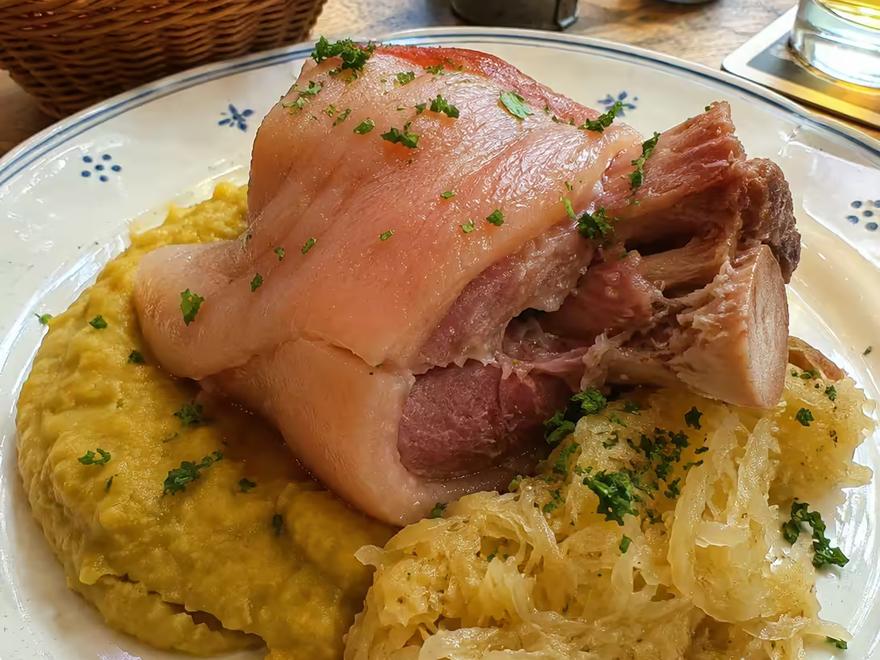
Eisbein is Berlin's pork knuckle, and it is worth being precise about it, because Bavaria's Schweinshaxe elsewhere on this list gets the same English translation and is a genuinely different dish. Eisbein is cured, then simmered gently in water for hours; the skin stays soft, not crisp.
Split-pea purée is the fixed partner here, thick and savory against the rich, tender pork. Sauerkraut on the side adds the acidity the dish otherwise lacks, since nothing here is roasted or browned.
Part of our 20 best German recipes list.
method
Put the cured knuckles in a large pot with the onion, carrot, leek, bay leaves, juniper and peppercorns. Cover with the water.
Bring to a gentle simmer, skim any foam, and cook uncovered at a low simmer for 2 to 2.5 hours, until the meat is completely tender and pulls easily from the bone. The skin should stay soft throughout, not crisp.
While the knuckles simmer, cook the split peas in the stock for 45 minutes to 1 hour, until completely soft and starting to break down.
Blend or mash the cooked peas smooth, adding a little more stock if needed to loosen. Stir in the butter and season with salt.
Lift the knuckles out of the broth once tender. Keep them whole, or carve the meat off the bone.
Serve the knuckles hot with the split-pea purée, warmed sauerkraut, and mustard on the side.
chef's tips
- Eisbein is cured and simmered in water, never roasted. The skin stays soft and almost gelatinous, which is the point, not a sign it needs more cooking.
- This is genuinely a different dish and a different technique from Bavaria's Schweinshaxe elsewhere on this list, which is fresh, unbrined and roasted for crisp skin. Both are called "pork knuckle" in English, which causes real confusion.
- Buy the knuckle already cured from a butcher if you can. Curing your own from scratch is possible but adds days to the process for little gain in flavor.
- Keep the simmering broth; strained, it makes a good base for a pea soup if you have leftovers.