
Bak Kut Teh
Pork ribs simmered for hours in a clear, peppery broth with whole garlic cloves, Teochew style, the version common across Singapore.
- prep
- 15 min
- cook
- 1 h 30 min
- total
- 1 h 45 min
- serves
- 4
- level
- medium
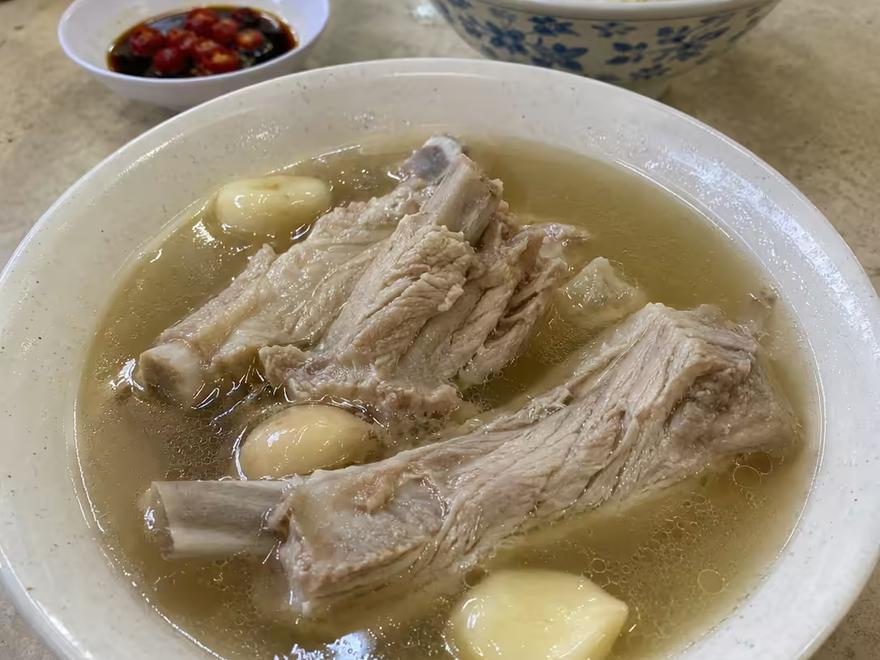
Bak kut teh means "meat bone tea," and in Singapore the standard version is the Teochew style: a clear broth built almost entirely on white pepper and whole garlic, simmered with pork ribs until both turn tender.
Give the broth real time. An hour and a half of gentle simmering is what pulls the pepper and garlic into the broth without clouding it, and rushing the process costs you both the clarity and the depth.
Part of our 20 best Singapore recipes list.
method
Blanch the pork ribs in boiling water for 3 minutes to remove surface impurities, then drain and rinse them.
Put the ribs in a large pot with the whole garlic heads and the water. Bring to a boil, then skim off any foam that rises.
Add the crushed white and black peppercorns. Lower the heat and simmer gently, partly covered, for 1.5 hours, until the pork is tender and the broth tastes distinctly peppery.
Season with the light soy sauce and salt to taste. The broth should be clear, not cloudy, and sharp with pepper rather than salty.
Ladle into bowls, making sure everyone gets a few whole garlic cloves, which turn soft and mild after the long simmer.
Serve with sliced you tiao for dipping, and a small dish of dark soy with sliced chili on the side for dipping the meat.
chef's tips
- This is the clear, peppery Teochew style common in Singapore, not the dark, herbal Klang style from Malaysia. The pepper should be the dominant flavor, not soy sauce.
- A long, gentle simmer, not a boil, keeps the broth clear. A hard boil clouds it and can make the pork stringy.
- White pepper does most of the work here. Buy it whole and crush it yourself if you can; pre-ground pepper loses its punch fast.
- The garlic cloves are meant to be eaten, not just for flavoring the broth. By the end of cooking they are soft and mellow, almost sweet.