
Ayam Buah Keluak
A Peranakan chicken braise built on a deep spice paste and earthy, fermented buah keluak nuts. A special-occasion Nyonya classic.
- prep
- 40 min
- cook
- 1 h
- total
- 1 h 40 min
- serves
- 4
- level
- hard
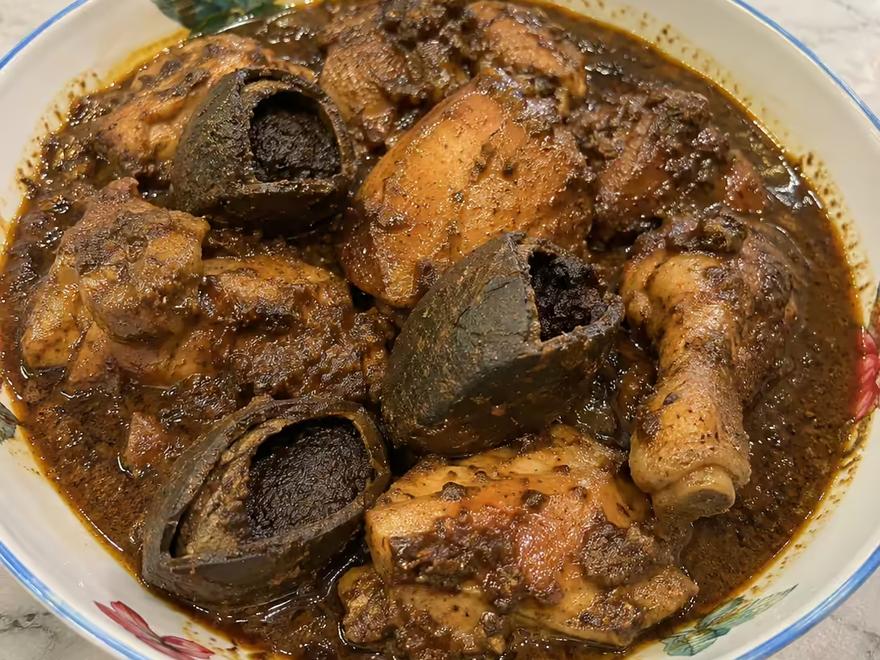
This is Peranakan cooking, the Chinese-Malay fusion cuisine of the Straits-born Chinese community, and it is usually saved for special occasions rather than a weeknight. The buah keluak nut carries the dish: earthy, faintly bitter, and like nothing else in regional cooking.
Buy the nuts already cleaned and soaked. Raw buah keluak needs careful preparation to remove a natural toxin, and that is not a corner to cut or improvise at home.
Part of our 20 best Singapore recipes list.
method
Scrub the soaked buah keluak shells clean. Crack each one open carefully with the back of a cleaver, just enough to access the opening, without shattering the shell.
Scoop out the black paste inside each nut into a bowl, being careful to remove any hard inner shell fragments. Mix the paste with a pinch of salt and a little of the tamarind water, then spoon it back into the empty shells. Set the filled shells aside.
Blend the shallots, garlic, galangal, lemongrass, candlenuts, chilies, belacan and turmeric into a smooth paste.
Heat the oil in a pot over medium heat and fry the paste for 8 to 10 minutes, until fragrant and the oil separates at the edges.
Add the chicken pieces and turn them in the paste until well coated, cooking for 3 to 4 minutes.
Add the tamarind water, the remaining water and the filled buah keluak shells. Bring to a simmer.
Cover and simmer gently for 40 to 45 minutes, until the chicken is tender and the gravy has thickened and darkened. Season with sugar and salt to taste.
Serve hot with rice. The nuts are scooped out at the table with a small spoon, not eaten whole.
chef's tips
- Buy buah keluak already cleaned and soaked from a Peranakan or Indonesian grocer if you can. Raw, unprocessed nuts contain a toxin that needs proper preparation to remove, and this is not a step to improvise.
- The paste inside the nut tastes earthy and slightly bitter, closer to a rich, fermented olive than a nut. That flavor, not the chicken, is what the dish is really about.
- This is a Peranakan, or Nyonya, specialty, a Chinese-Malay fusion cuisine distinct from both Chinese and Malay cooking on their own.
- Make it a day ahead if you can. Like most braises built on a spice paste, it tastes better once the flavors have had a day to settle.