
Anzac Biscuits
Golden oat, coconut and golden-syrup biscuits with chewy or crisp edges, depending on how long they bake. Originally sent overseas to soldiers in care packages.
- prep
- 15 min
- cook
- 15 min
- total
- 30 min
- serves
- 12
- level
- easy
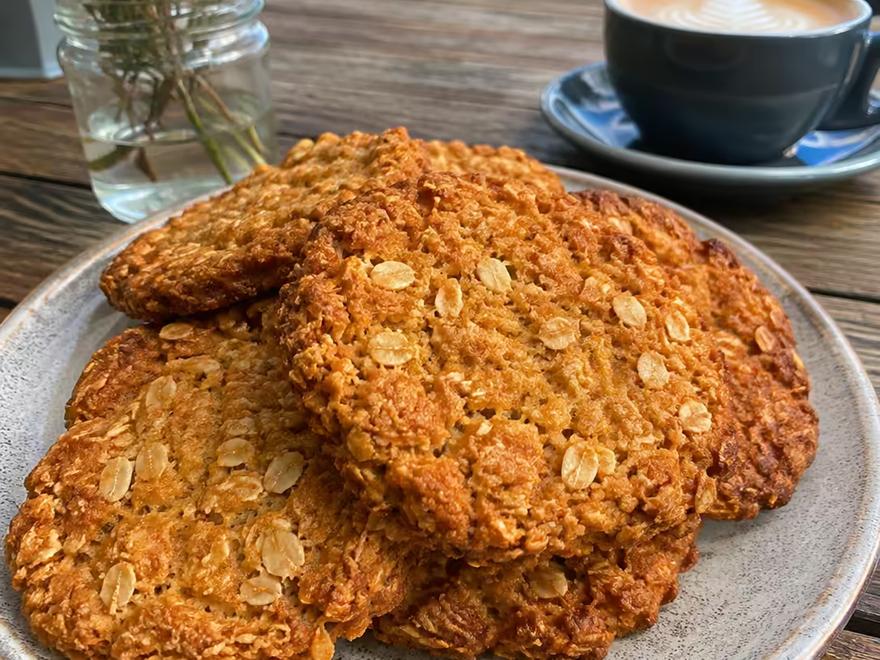
Anzac biscuits have real history behind them: a no-egg recipe designed during the First World War so women could send a treat to soldiers overseas that would actually survive the long journey without spoiling.
That absence of egg is exactly why golden syrup and a baking soda reaction do the binding and leavening instead, and it is also why these keep so well in a tin at home, more than a week past baking.
Part of our 20 best Australian recipes list.
method
Preheat the oven to 160°C (320°F) and line two baking trays with parchment.
Mix the oats, coconut, flour and sugar together in a large bowl.
Melt the butter and golden syrup together gently in a small saucepan.
Dissolve the baking soda in the boiling water, then stir it into the melted butter mixture; it will foam up slightly.
Pour the butter mixture into the dry ingredients and stir until well combined into a firm, slightly crumbly dough.
Roll into balls, about 2 tablespoons each, and flatten slightly on the trays, leaving room to spread.
Bake for 12 to 15 minutes, until golden; bake toward the shorter end for a chewier biscuit, longer for a crisper one.
Let them firm up on the tray for a few minutes before moving to a cooling rack.
chef's tips
- There is no egg in this recipe, which is not an oversight. Anzac biscuits were designed to be sent overseas to soldiers during the First World War, and a recipe without egg kept far better over the long journey without refrigeration.
- Golden syrup, not honey, is the traditional sweetener and binder here, along with the baking soda reaction, which replaces the leavening and binding an egg would normally provide.
- Bake time is a genuine choice, not a target to hit exactly. Less time gives a chewier biscuit, more gives a crisp, snappy one; both are correct depending on preference.
- These keep very well in an airtight container for over a week, part of why they traveled so successfully in the first place.